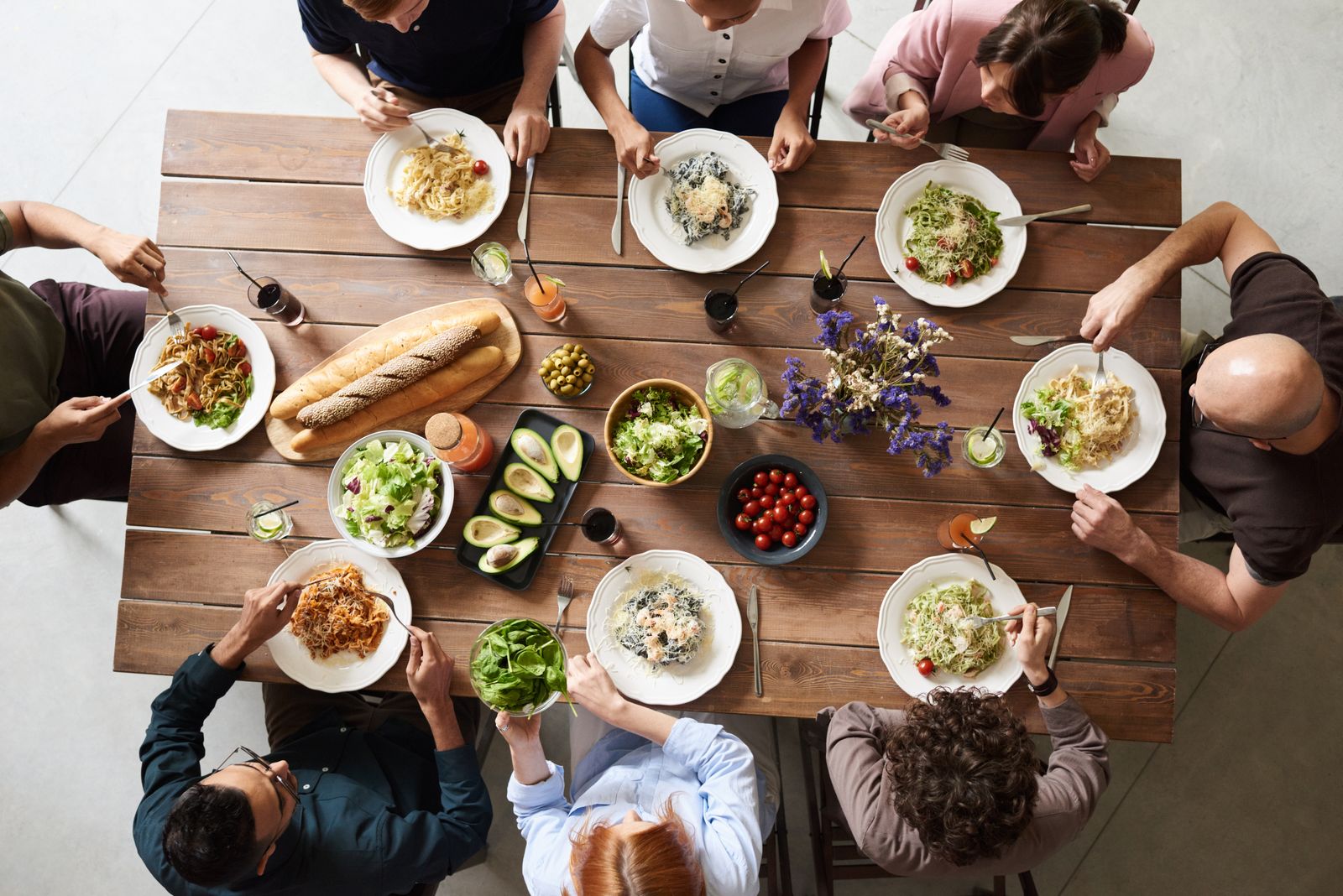
Same Recipe, 4 Cooks, One Winner — The Dish Got Wild
We gave 4 friends the exact same recipe. What landed on the plate was anything but the same. Here's what happened — and how to run it yourself.
Key Takeaways
- Giving 4 people the exact same recipe produces wildly different results — and that gap is the whole game.
- The "same recipe" format is the fairest, funniest cooking competition you can run at home.
- Small decisions — heat level, seasoning timing, plating — separate winners from also-rans.
- You don't need expensive equipment or pro skills; personality and instinct win this format.
- Blind judging by a non-cook is the secret to keeping results honest (and hilarious).
- You can set this up in under an hour using Dine With Me — scoring, format, and all.
Four people. One printed recipe. Identical ingredients measured and bagged in advance. Same kitchen timer. And yet, when the plates hit the table 45 minutes later, you would have sworn they’d each cooked a completely different dish. One was elegant. One was bold. One was technically perfect but somehow lifeless. And one — the one nobody expected — made the judge put down her fork and say, “Wait. What did you do to this?” That cook won.
This is the format we ran last Saturday, and it turned a regular dinner party into the most genuinely competitive — and genuinely entertaining — evening any of us had had in years. Here’s exactly what happened, what we learned, and how you can steal the whole format.
The Setup: Why "Same Recipe" Is the Most Revealing Format
Most home cooking competitions fall apart at the fairness problem. If everyone brings their own dish, the person who made a three-day braise automatically has an unfair advantage. Themed free-for-alls reward whoever happened to specialise in that cuisine. The same-recipe format solves all of that — everyone starts from zero, reads the same instructions, and interprets them with their own hands.
The recipe we chose: a classic pan-seared chicken thigh with a white wine pan sauce, served over soft polenta. Not too simple (there’s real technique involved) and not so complex that a home cook would panic. It has about six decision points where individual style bleeds in — and those six points are where the competition is actually won or lost.
Choose a recipe with at least 3–4 “interpretive” steps — moments where the instructions say something like “season to taste” or “cook until golden.” That’s where personality enters the dish.
Meet the 4 Cooks (And Their Styles)
Cook 1 — The Technician
Marcus read the recipe three times before touching a pan. His mise en place was immaculate. Every ingredient portioned, every step timed with his phone. His chicken had the most perfect sear of the four — deep mahogany, almost architectural.
But the panel called his dish “correct.” Not exciting — correct. His pan sauce was balanced, his polenta smooth, his plating precise. It tasted exactly like the recipe promised. Which, in a competition where everyone had the same recipe, turned out not to be enough.
Cook 2 — The Improviser
Dani glanced at the recipe once and then basically freestyled. She added smoked paprika to the chicken skin at the last second (“I just felt like it”), threw in a handful of fresh thyme she found in the fridge, and finished the polenta with a knob of butter that was definitely not in the ingredient list.
The judges flagged the thyme as a deviation — but since we’d agreed beforehand that seasoning additions were allowed, it stood. Her plate smelled incredible. The taste was a little chaotic, but in the best possible way. She came in second, narrowly.
Cook 3 — The Overthinker
James had the most culinary knowledge of anyone at the table — and it nearly destroyed him. He second-guessed the recipe’s instruction to start the chicken skin-side down in a cold pan, convinced himself the recipe was wrong, and preheated the pan to ripping hot. The skin split. He spent ten minutes trying to fix it.
His polenta was phenomenal — genuinely the best of the four. Creamy, rich, seasoned perfectly. But the chicken let him down, and the judges couldn’t overlook a split skin on a dish where the sear was half the brief. Third place.
Cook 4 — The Dark Horse 🏆
Nobody was watching Priya closely for the first twenty minutes because she was quiet and steady and gave nothing away. Then, in the last five minutes, she did something none of us caught in the moment: she basted the chicken with the pan sauce before it came off the heat, twice, at thirty-second intervals. The recipe didn’t say to do that. She’d just seen it once on a cooking show and thought it made sense.
When the blind judging results came back, her plate scored highest on flavour, texture, and — tellingly — “would you order this in a restaurant?” She won by four points. When the judge found out it was Priya, her exact words were: “I knew something happened to this chicken. What did you do?”
The 6 Moments Where the Competition Was Actually Won
When we debriefed afterwards, we traced the outcome back to six specific decision points in the recipe — the spots where everyone diverged, consciously or not. These are the moments that define the same-recipe format.
- How hot the pan was when the chicken went in — cold start vs. blazing hot changes the entire texture of the skin.
- When they seasoned — before the sear, after, or during the rest. Timing changes salt penetration completely.
- How long they let the pan fond develop before deglazing with wine — more fond = deeper sauce.
- Whether they tasted the sauce mid-cook and adjusted, or trusted the recipe blindly.
- How they finished the polenta — ratio of liquid to cornmeal at the end is everything.
- The last 90 seconds — basting, resting, plating speed. Most people rush here. Priya didn’t.
Want to run this exact format with your own group? Set up your same-recipe cook-off on Dine With Me in minutes.
Create Your CompetitionHow to Run a Same-Recipe Competition at Home
1Choose the Right Recipe
Pick something with real technique but approachable enough that no one needs professional training. Pan sauces, risottos, simple tarts, braised proteins — all work brilliantly. Avoid anything that’s just assembly (like a salad) or anything that takes more than 60 minutes; attention spans drop fast.
- 3–5 interpretive steps minimum
- 60 minutes or under
- Accessible to your least experienced cook
2Pre-Measure and Bag Every Ingredient
This is the unglamorous part that makes everything else work. Each cook gets an identical kit: same quantities, same brand of key ingredients (especially butter, wine, and stock), same pan size if possible. The goal is to remove equipment advantages so the human variable is all that’s left.
3Set a Hard Time Limit and a Blind Judge
45 minutes works well for most intermediate recipes. When the timer hits zero, plates go to the judge — ideally someone who didn’t cook. A non-cook judges on pure eating experience, not on whether someone “tried really hard.” Kids are excellent judges for this reason: brutally honest, zero politics.
4Score on 3–4 Clear Criteria
Taste (40%), texture (30%), presentation (20%), creativity within the recipe (10%) is a solid starting split. Write the criteria on a card before cooking begins so no one can argue the goalposts moved. Having a scoring sheet makes the whole thing feel much more like a real competition — and much more fun.
- Taste: 40 points
- Texture: 30 points
- Presentation: 20 points
- Creativity within the recipe: 10 points
5Debrief Together Over the Meal
Once the winner is announced, eat all four versions together and talk through what each cook did differently. This is secretly the most valuable part of the evening — everyone learns something, and the conversation keeps going for hours. Priya’s basting technique became the topic of a 25-minute argument about whether it was “within the spirit of the recipe.” (It was. She won. That’s final.)
Don’t let cooks watch each other too closely — it discourages creative decisions. Spread stations around the kitchen so each person cooks in their own headspace. A little separation produces dramatically more varied results.
What the Same-Recipe Format Teaches You About Cooking
The most striking takeaway from our evening wasn’t who won. It was the moment we realised that a recipe is not a guarantee — it’s a starting point. Marcus followed it precisely and produced a technically correct dish. Priya followed it confidently and added one small intuitive move at the end, and the difference was unmistakable. Cooking skill isn’t about memorising recipes; it’s about understanding why each step exists, so you know when you can push past it.
James, despite finishing third, probably learned the most. His overthinking — ironically caused by knowing too much — taught him something no cookbook can: trust the process until you have a concrete reason not to. He’s already asking when we’re doing the rematch.
Ready to sharpen your own technique? Browse step-by-step recipes built for home cook competitions on Dine With Me.
Explore the CookbookThe Rematch Is Already Planned — Here's the New Recipe
Three days after the competition, our group chat had already agreed on a rematch recipe: beef bourguignon, simplified to a 60-minute stovetop version. Same format, same blind judging, but this time we’re adding a penalty round — the cook in last place has to present a 30-second defence of their dish before the scores are final. James is campaigning hard for this rule. We know why.
The same-recipe format is, in our experience, the single best structure for a home cooking competition. It’s fair, it’s revealing, it’s genuinely competitive, and it always ends with everyone wanting to go again. That’s the mark of a great game.
Whether you run it as a casual Saturday night with four friends or a more organised event through Dine With Me’s competitions platform, the formula is the same: pick a recipe with soul, give everyone equal footing, find an honest judge, and get out of the way. The dish will do the rest — and it will always get wild.
Related Articles
I Ran a Cooking Competition Every Month for a Year — Here's What I Learned (and Earned)
I hosted 12 home cooking competitions in 12 months. Here's every mistake, surprise, and dollar earned along the way.
COMPETITIONSI Hosted a Come Dine With Me Night for 6 Strangers — What Actually Happened
I recreated Come Dine With Me at home for 6 strangers. The drama, the scores, the food — here's exactly what happened (and what I'd do differently).
COMPETITIONSI Ran My First Cooking Competition — Here's What I'd Do Differently
I hosted my first home cooking competition for 6 friends — it was chaotic, hilarious, and full of mistakes. Here's exactly what I'd change next time.
Stay in the loop!
Get cooking tips, competition updates, and new features delivered to your inbox.
No spam, unsubscribe anytime.