I Made €480 in a Weekend Hosting Cooking Competitions — How
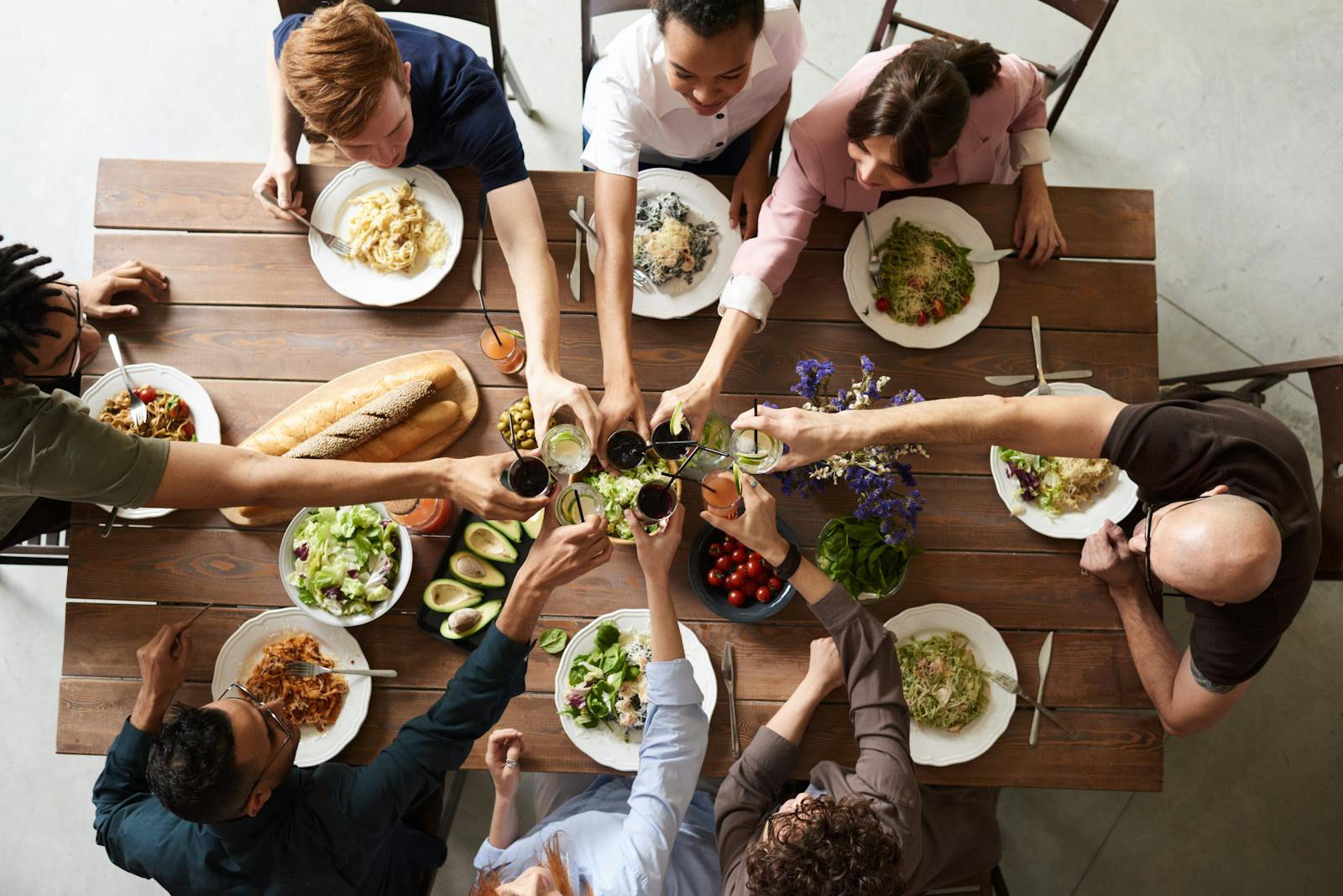
One weekend, two competitions, eight friends — and €480 in my pocket. Here's exactly how I set it up, what I charged, and how you can do the same.
Key Takeaways
- One host ran two paid cooking competitions in a single weekend and cleared €480 — here's the exact breakdown.
- You don't need a restaurant or a chef's qualification — a home kitchen and a good format are enough.
- Ticket pricing, theme selection, and a fair scoring system are the three levers that drive revenue.
- The Dine With Me platform handles competition setup in under 2 minutes, so you spend energy on the food, not the admin.
- Repeat guests are your biggest asset — both weekends ended with bookings for the next event.
- Common mistakes (over-catering, vague judging, no entry fee) are easy to avoid once you know them.
Saturday morning I had €0 and a free kitchen. By Sunday night I had €480 in my account, two groups of genuinely thrilled guests, and three people already asking when the next one was. This wasn't a fluke or a side hustle that took months to build — it was two cooking competitions, back to back, using a format anyone can replicate this weekend.
I'm not a professional chef. I don't have a catering licence or a commercial kitchen. What I had was a decent cooker, a dining table that seats eight, and a clear format. Here's everything I did — the pricing, the themes, the scoring, and the moments that almost went wrong.
The Weekend in Numbers
Before the how, here's the what. Saturday evening: six guests, a “Mystery Box” competition, €30 entry fee each = €180. I spent roughly €55 on ingredients, leaving €125 profit. Sunday afternoon: eight guests, a “Regional Italy” themed cook-off, €45 entry fee each = €360. Ingredients cost €85, leaving €275 profit. Total over 48 hours: €480 clear. Both events ran for about three hours each. Both sold out within 36 hours of me posting them.
Don't price your entry fee to cover costs alone — price it for the experience. Guests are paying for the fun, the competition format, and the shared meal, not just the food on the plate.
Step 1: Pick a Format That Sells Itself
The biggest mistake first-time hosts make is keeping the format too vague. “Come cook dinner with friends” doesn't sell tickets. A named competition with clear stakes does. People want to know exactly what they're walking into — and they want to be able to brag about it afterwards.
1Choose a Theme With a Clear Creative Constraint
A theme does two things: it makes the event easy to describe in one sentence, and it levels the playing field so novice cooks can compete with more experienced ones.
My Saturday theme was a Mystery Box — every competitor received the same five surprise ingredients and had 45 minutes to create a dish. Sunday’s theme was Regional Italy — each competitor was assigned a different Italian region and had to cook one dish from it.
- Mystery Box (surprise ingredients) — great for mixed skill levels
- Regional cuisine deep-dive — works beautifully for food nerds
- Budget challenge (each cook gets €8 to spend) — very shareable on social
- Childhood favourite remix — emotionally engaging, always funny
2Set a Clear Time Limit and Announce It Upfront
A time limit creates tension — and tension is what makes a cooking competition feel like an event rather than just a dinner party. I used 45 minutes of cooking time for both events, which is long enough to produce a real dish but short enough to keep energy high.
Post the time limit in your invitation so guests can mentally prepare. It also signals that this is a structured experience, not a casual hangout — and that justifies the ticket price.
Step 2: Set Your Pricing and Fill Your Spots
Pricing is where most hosts undervalue themselves. I see people charge €10–€15 for events like this and wonder why it feels like a favour rather than a business. The rule I use: price at what a mid-range restaurant meal costs in your city. In my case, that was €30–€45. At that price, guests arrive expecting quality — and that expectation actually makes them more engaged and better behaved.
3Use a Platform to Manage Sign-Ups and Payment
Chasing Venmo payments and keeping a WhatsApp list of RSVPs is how you lose money and gain stress. I set up both competitions on Dine With Me, which took under two minutes per event — name, theme, date, entry fee, number of spots.
Once it was live, I shared the link in my usual social circles. The platform handled payments and confirmations automatically. By the time guests arrived on Saturday, I hadn't sent a single follow-up message.
4Cap Your Guest Numbers Deliberately
For a home kitchen, 6–8 guests is the sweet spot. Fewer than 6 and the competition feels thin; more than 8 and your kitchen becomes chaotic and the judging drags.
Capping numbers also creates scarcity. Both my events sold out — partly because I only offered 6 and 8 spots respectively. If I'd opened 20 spots, I'd have been chasing sign-ups instead of being sold out.
Ready to set up your first paid cooking competition? Dine With Me makes it live in under 2 minutes.
Create Your CompetitionStep 3: Build a Scoring System Guests Trust
Nothing kills a cooking competition faster than a judging system that feels rigged or subjective. Even among friends, people care about fairness. I use a dead-simple three-category scorecard that takes 60 seconds to explain and produces a clear winner every time.
The 3-Category Scorecard
Score each dish out of 10 in three categories: Taste (flavour balance, seasoning, texture), Creativity (how inventively they used the theme or ingredients), and Presentation (does it look like something you’d pay for in a restaurant?).
Each guest scores every dish except their own. Tally the totals publicly — I write them on a whiteboard in real time. The transparency is half the fun.
Announce the prize before cooking starts — even if it’s just a bottle of wine or a “Golden Spatula” trophy. A declared prize raises the competitive energy in the room dramatically.
Step 4: Manage the Kitchen Logistics
The logistics are where first-time hosts lose their minds — and their margins. I over-bought for my very first event six months ago and spent €90 on ingredients for a group of five. This time, I planned tightly.
5Buy Ingredients the Morning Of — Not the Day Before
Fresh ingredients bought the morning of the event are cheaper (less buffer buying), better quality, and reduce waste dramatically. For the Mystery Box, I bought exactly five ingredients per competitor plus a small pantry buffer (olive oil, salt, basic spices, pasta) that I already owned.
For Regional Italy, I assigned regions two days in advance so guests knew which region they were cooking — this meant I could buy targeted ingredients rather than a full Italian supermarket sweep.
6Set Up Individual Prep Stations Before Guests Arrive
Each competitor gets their own chopping board, knife, small prep area, and labelled set of ingredients. This prevents the chaos of six people reaching for the same pan and makes the competition feel professional.
I lay everything out 30 minutes before the start time. When guests walk in and see their named station, the atmosphere shifts immediately — they know this is a real event.
What Made Guests Come Back — and Refer Friends
Revenue on the night is only half the business model. The other half is repeat bookings and referrals. By Sunday evening, three guests had asked about the next event date and two had already shared the Dine With Me competition link with their own networks.
The Shared Meal at the End
After judging, every dish goes on the table and everyone eats together. This is non-negotiable. It transforms a competition into a dinner party and sends guests home full, happy, and talking about the experience.
It also means competitors are emotionally invested in each other’s food — they want to taste the dish they just judged. That communal ending is what gets you the five-star review and the referral.
The “Already Booked” Mention at the End of the Night
As guests were leaving, I casually mentioned that the next competition was already in the calendar for three weeks’ time and that I’d be sending the link first to people in the room. Four of the fourteen guests across both events signed up within 24 hours.
This isn’t manipulation — it’s momentum. People are most excited about repeating an experience in the first 12 hours after it ends. That’s the window to capture them.
Want to browse how other hosts are structuring their competitions for inspiration?
Browse Live CompetitionsThe Mistakes I Made So You Don't Have To
This weekend wasn’t my first cooking competition — it was my fourth and fifth. The first two were free, chaotic, and financially pointless. Here’s what I changed.
- Don’t host for free — even €10 entry changes the energy. Paid guests show up on time, take it seriously, and respect your kitchen.
- Don’t skip the briefing — spend five minutes explaining the rules and scoring before anyone touches a knife. Confusion mid-competition ruins the atmosphere.
- Don’t over-cater — your ingredient budget should be 25–35% of your gross revenue, no more.
- Don’t let the judging drag — set a 15-minute window for scoring and stick to it. Long judging kills momentum.
- Don’t forget to photograph everything — the plated dishes, the scoreboard, the shared meal. That content is your marketing for the next event.
Can You Actually Scale This?
After two solid weekends, the question I keep getting is: is this a real income stream or a one-off? Honestly, it depends on your appetite for hosting. Run two competitions a weekend, twice a month, and you’re looking at €1,500–€2,000 per month from your home kitchen. That’s before you consider premium themed events (wine pairing, festive specials, couples cook-offs) which can command €60–€80 per head.
The ceiling rises when you build a regular audience. My goal for the next three months is a monthly “Grand Prix” format — past winners from previous competitions compete for a bigger prize, with a higher entry fee and a longer format. That kind of event can generate €600–€800 in a single evening.
If you’ve been sitting on the idea of hosting cooking competitions but weren’t sure there was real money in it — there is. The format is proven, the demand is there, and the platform makes the admin effortless. The only thing missing is your first event. Get it set up on Dine With Me today and you could be hosting your first paid competition this weekend.
Related Articles
I Ran a Cooking Competition Every Month for a Year — Here's What I Learned (and Earned)
I hosted 12 home cooking competitions in 12 months. Here's every mistake, surprise, and dollar earned along the way.
COMPETITIONSI Hosted a Come Dine With Me Night for 6 Strangers — What Actually Happened
I recreated Come Dine With Me at home for 6 strangers. The drama, the scores, the food — here's exactly what happened (and what I'd do differently).
COMPETITIONSI Ran My First Cooking Competition — Here's What I'd Do Differently
I hosted my first home cooking competition for 6 friends — it was chaotic, hilarious, and full of mistakes. Here's exactly what I'd change next time.
Stay in the loop!
Get cooking tips, competition updates, and new features delivered to your inbox.
No spam, unsubscribe anytime.